What are the different categories of aluminum alloys, and how do their specific elements determine their final industrial applications?
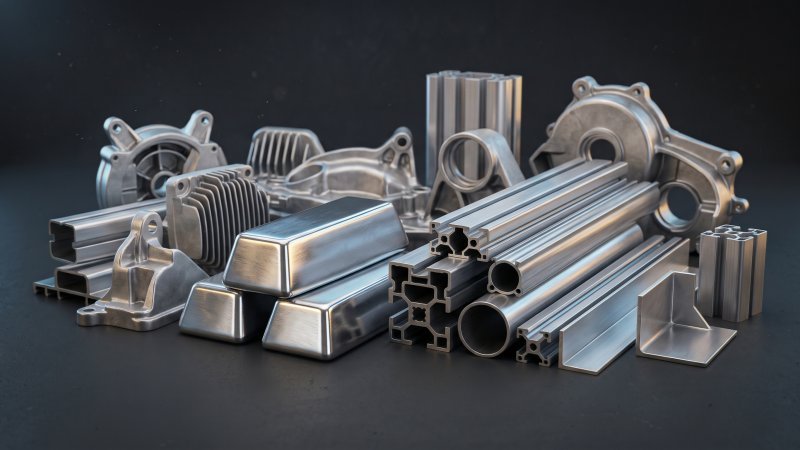
Aluminum alloys are broadly categorized into two main groups: wrought alloys, which are mechanically shaped, and cast alloys, which are poured into molds. They are further classified by a numbered series system (1000–8000 for wrought, and 1xx.x–8xx.x for cast) based on their primary alloying elements such as copper, magnesium, silicon, or zinc. This specific elemental composition directly dictates the metal’s final tensile strength, corrosion resistance, weldability, and heat-treatability, ultimately deciding if the material is suited for aerospace engineering, marine hardware, or general architectural use.
Wrought Aluminum Alloys
What exactly are wrought aluminum alloys, and why are they so common in manufacturing?
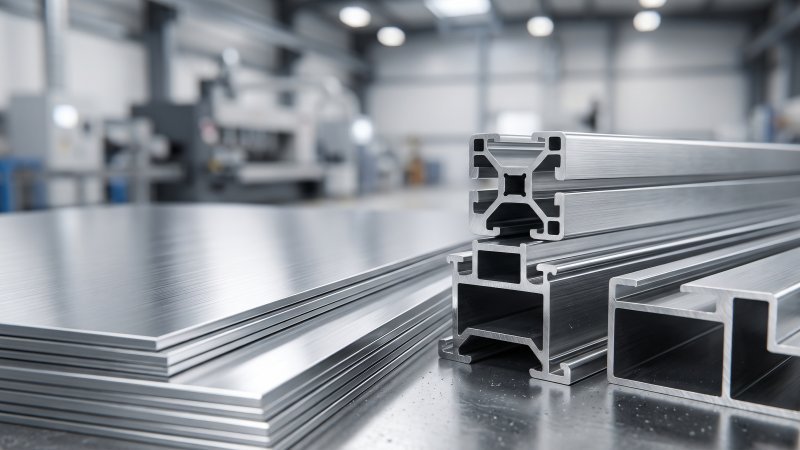
Wrought aluminum alloys are metal blends that undergo mechanical working processes, such as rolling, forging, or extrusion, to achieve their final shape. Manufacturers add specific elements, like copper or magnesium, to pure aluminum to drastically improve its structural strength, machinability, and corrosion resistance.
Wrought Series Primary Elements and Treatability:
| Series | Primary Alloying Element | Heat Treatable? | Key Characteristic |
|---|---|---|---|
| 1000 | None (99%+ Pure Aluminum) | No | Maximum thermal/electrical conductivity |
| 2000 | Copper | Yes | High strength, low corrosion resistance |
| 3000 | Manganese | No | Good formability, moderate strength |
| 4000 | Silicon | No | Low melting point, prevents brittleness |
| 5000 | Magnesium | No | Excellent saltwater corrosion resistance |
| 6000 | Magnesium & Silicon | Yes | Balanced strength and machinability |
| 7000 | Zinc | Yes | Maximum tensile strength |
| 8000 | Other (Iron, Nickel, etc.) | Varies | Specialized industrial properties |
1000 Series: Chemical and Electrical Applications
The 1000 series contains essentially pure aluminum. Specifically, it must maintain a minimum purity level of 99%. Consequently, this series is extremely soft. It is completely non-heat treatable. However, it offers exceptional thermal and electrical conductivity. Furthermore, it boasts the highest natural corrosion resistance among all aluminum categories.
Manufacturers frequently utilize Alloy 1100 in chemical processing equipment. The high purity naturally prevents unwanted chemical reactions. Additionally, Alloy 1350 serves as a standard material for electrical busbars and transmission lines.
2000 Series: Aerospace and High-Temperature Parts
Copper acts as the primary alloying element in the 2000 series. Therefore, engineers can heat-treat these alloys to achieve incredible durability. In fact, their yield strength frequently rivals that of low-carbon steel. However, adding copper significantly reduces the metal’s natural corrosion resistance. To solve this issue, manufacturers typically clad these parts with a thin layer of high-purity aluminum.
Alloy 2024 remains the industry standard for aerospace manufacturing. Aircraft wing tension members rely heavily on this specific material. Similar to how heat-treating a high-speed steel (HSS) cutting tool transforms its internal grain structure for maximum wear resistance during milling, heat-treating the 2000 series locks copper atoms securely into the metal matrix to endure severe mechanical stress.
3000 Series: Sheet Metal Work and Heat Exchangers
Manganese serves as the main alloying element in this category. As a result, the 3000 series provides roughly 20% more strength than the 1000 series. It remains non-heat treatable. Yet, it retains excellent formability and superior welding characteristics.
Alloy 3003 stands out as the most widely used general-purpose aluminum on the market. Fabricators use it extensively for sheet metal work, stamped parts, and heat exchanger tubes. Its balanced mechanical properties make it very easy to draw and bend without cracking the material.
4000 Series: Welding Wire and Brazing Materials
The 4000 series relies heavily on silicon as its primary addition. Silicon significantly lowers the melting point of the metal. Most importantly, it does this without causing the material to become brittle. Therefore, fabricators primarily use this series to join other metal components together.
Alloy 4043 serves as a standard welding filler wire across the industry. Welders consistently use it to join 6000 series structural parts. The lower melting point ensures the filler material flows smoothly into the weld joint long before the base metal begins to melt.
5000 Series: Marine Environments and Pressure Vessels
Magnesium defines the 5000 series. This specific addition creates a non-heat treatable metal with moderate-to-high mechanical strength. Moreover, this series offers absolutely outstanding resistance to saltwater corrosion. It also maintains excellent weldability under pressure.
Marine engineers rely heavily on Alloy 5052 and Alloy 5083. You will frequently find Alloy 5083 in structural ship hulls and highly pressurized cryogenic vessels. The high magnesium content naturally generates a resilient oxide layer that protects against harsh, salty ocean environments.
6000 Series: Architectural Extrusions and Structural Components
This series carefully combines both silicon and magnesium. Together, these elements form magnesium silicide. This specific chemical combination makes the 6000 series fully heat treatable. Ultimately, it offers a perfect balance of structural strength, ease of machinability, and solid corrosion resistance.
Alloy 6061 and Alloy 6063 completely dominate this category. Heavy industrial extrusion presses effortlessly force heated 6063 through steel dies to create intricate architectural window frames. Meanwhile, precision machinists strongly prefer 6061 for milling heavy-duty structural brackets and custom CNC parts due to its excellent chip control.
7000 Series: Aircraft Structures and High-Stress Applications
Zinc acts as the primary alloying element in the 7000 series. When engineers combine zinc with a smaller amount of magnesium, they create heat-treatable alloys of exceptional strength. In fact, this series consistently offers the highest tensile strength among all aluminum alloys.
Alloy 7075 is a premier aerospace material. It boasts an impressive yield strength of up to 73,000 psi. Manufacturers strictly use it for highly stressed aircraft bulkheads and heavy-duty equipment frames. However, this extreme strength makes it considerably harder to form and weld compared to the 6000 series.
8000 Series: Foil Packaging and Conductor Cables
The 8000 series includes unique elements like iron and nickel that do not fit into the other numerical categories. These elements successfully increase structural strength without sacrificing too much conductivity or formability.
Alloy 8011 is strictly optimized for commercial foil packaging. It remains highly impermeable, making it absolutely perfect for pharmaceutical blister packs. Additionally, engineers formulate Alloy 8176 specifically for electrical conductor cables, as it offers much better creep resistance than the pure 1000 series.
Cast Aluminum Alloys
How do cast aluminum alloys differ from wrought materials, and why are they critical for producing complex metal shapes?
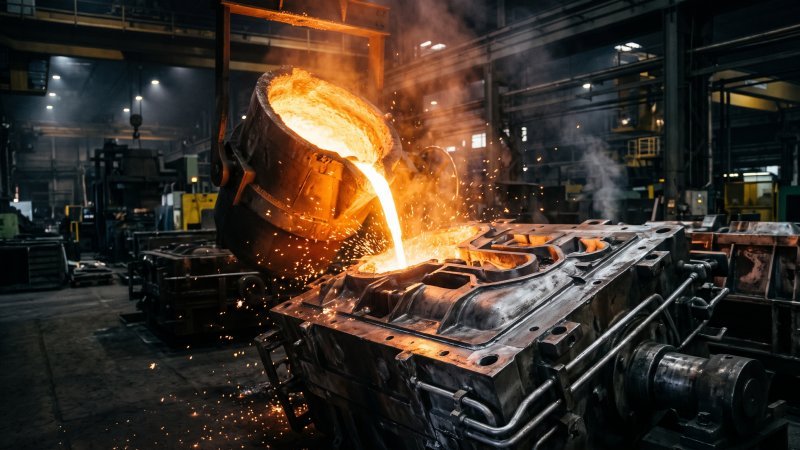
Cast aluminum alloys are specifically formulated to be melted and poured directly into molds. This allows manufacturers to create complex, three-dimensional parts in a single production step. These alloys contain much higher levels of silicon than wrought aluminum. This essential addition dramatically increases the fluidity of the molten metal. It also prevents hot cracking and minimizes material shrinkage as the final part cools and solidifies.
Cast Series Designations and Core Properties:
| Series | Primary Alloying Element | Notable Trait | Primary Industrial Focus |
|---|---|---|---|
| 1xx.x | None (99%+ Pure) | Low strength | Maximum electrical conductivity |
| 2xx.x | Copper | High heat resistance | High-temperature engine parts |
| 3xx.x | Silicon + Copper/Magnesium | High versatility | General automotive casting |
| 4xx.x | Silicon | Extreme fluidity | Intricate, thin-walled molds |
| 5xx.x | Magnesium | Saltwater protection | Heavy marine hardware |
| 7xx.x | Zinc | Room-temperature aging | Agricultural machinery bases |
| 8xx.x | Tin | Solid lubrication | Friction-heavy bearing surfaces |
1xx.x Series: Rotor Manufacture and Electrical Parts
The 1xx.x series represents commercially pure cast aluminum. Specifically, it contains at least 99% pure aluminum without any major alloying elements. Therefore, this series is extremely soft and yields very low mechanical strength. However, it provides absolutely unmatched electrical conductivity.
Why choose a weak metal for industrial manufacturing? Foundries rely heavily on the 1xx.x series exclusively for electrical applications. Manufacturers typically die-cast this pure metal directly into electrical motor rotors. The high material purity ensures maximum efficiency in power transmission.
2xx.x Series: Cylinder Heads and Engine Components
Copper serves as the primary alloying addition in the 2xx.x series. Consequently, these castings respond exceptionally well to heat treatment. This series boasts incredible tensile strength. Furthermore, it maintains structural integrity even at highly elevated temperatures.
Just as adding cobalt allows cutting tools to survive immense heat during aggressive CNC milling, adding copper allows cast aluminum to withstand extreme thermal stress inside an engine block. Therefore, automotive engineers frequently specify 2xx.x alloys for high-performance cylinder heads and exhaust system components.
3xx.x Series: Automotive Blocks and General Purpose Castings
The 3xx.x series combines silicon with copper or magnesium. This specific chemical combination makes it the most widely used cast aluminum family in the manufacturing industry. Silicon guarantees excellent liquid flow during the pouring process. Meanwhile, copper and magnesium provide severe structural toughness.
Alloy 356.0 and 319.0 completely dominate this category. In large-scale automotive production, factories cast engine blocks, transmission cases, and wheels using these versatile alloys. Ultimately, they offer a perfect balance of castability, machinability, and final part strength.
4xx.x Series: Pump Casings and Thin-Walled Components
Silicon acts as the sole major element in the 4xx.x series. Adding pure silicon drastically lowers the melting point of the base aluminum. More importantly, it gives the molten metal incredible fluidity.
This extreme liquid flow makes the 4xx.x series perfect for highly complex molds. Foundries use it to produce thin-walled components that would otherwise suffer from incomplete fills or cracks. For instance, manufacturers regularly use these alloys to cast intricate pump casings and complex industrial valve housings.
5xx.x Series: Sand Castings and Marine Fittings
Magnesium defines the 5xx.x series of cast alloys. Unlike silicon-heavy alloys, these metals are notoriously difficult to pour into complex die-cast molds. Consequently, manufacturers typically process them using traditional sand casting methods.
However, the high magnesium content delivers outstanding resistance to environmental corrosion. Furthermore, these castings maintain excellent surface finishes when machined and polished. Marine equipment manufacturers heavily depend on the 5xx.x series to produce deck hardware, steering wheels, and structural ship fittings that constantly face harsh saltwater.
7xx.x Series: Furniture and Agricultural Equipment Parts
Zinc is the core element inside the 7xx.x casting series. These unique alloys possess a remarkable physical trait. They naturally age and harden at room temperature over several weeks. Therefore, foundries can achieve high-strength parts without utilizing expensive heat-treatment furnaces.
They also provide exceptional post-cast machinability. Factories frequently select the 7xx.x series for heavy-duty applications that do not require highly complex casting geometry. Common industrial applications include heavy agricultural equipment brackets, machine tool bases, and structural metal furniture frames.
8xx.x Series: Bearings and Bushing Components
The 8xx.x series relies on tin as its primary alloying ingredient. Adding tin fundamentally changes the surface properties of the cast aluminum. Specifically, it creates a finished metal with incredibly low friction and excellent wear resistance.
Engineers exclusively specify the 8xx.x series for high-friction mechanical environments. In the same way a CNC machinist applies cutting fluid to prevent a drill bit from binding in a workpiece, the high tin content acts as a permanent solid lubricant within the metal itself. Consequently, this series is the premier choice for manufacturing heavy-duty sliding bearings and internal engine bushings.
Conclusion
Understanding the distinct types of aluminum alloys and their uses is the foundational step in any successful manufacturing project. Whether your design requires the extreme tensile strength of the 7000 series wrought aluminum for an aerospace component, or the intricate fluid castability of the 4xx.x series for a custom pump housing, matching the right alloying elements—like copper, magnesium, zinc, or silicon—to your specific operational environment is absolutely critical. Selecting the correct material prevents premature mechanical failure, minimizes manufacturing costs, and ensures long-term product reliability.