What exactly is aluminum, and why has it become one of the most essential materials in precision machining and modern manufacturing?
Aluminum is a silvery-white, lightweight metallic element characterized by its exceptional strength-to-weight ratio, excellent natural corrosion resistance, and high thermal and electrical conductivity. These foundational physical, mechanical, and chemical properties make it a highly versatile and indispensable material across the aerospace, automotive, and CNC machining industries.
Physical Properties of Aluminum
The physical properties of aluminum fundamentally dictate how it behaves during machining operations and in final application environments.
Aluminum features a unique combination of low density, high thermal and electrical conductivity, and strong reflectivity. Therefore, these inherent physical traits allow manufacturers to reduce overall product weight, manage heat dissipation efficiently, and reflect radiant energy across various precision industrial applications.
Low Density and Lightweight Characteristics
Density refers to how much mass fits into a specific volume. So, how light is this metal? Specifically, aluminum has a density of roughly 2.7 grams per cubic centimeter (g/cm³). In contrast, standard carbon steel has a density of about 7.8 g/cm³.
Consequently, aluminum is about one-third the weight of steel. This low density heavily influences material selection in manufacturing. For instance, when designing heavy-duty CNC machine fixtures or tombstone workholding systems, engineers frequently choose aluminum over steel. This reduces the total mass placed on the machine’s rotary table, allowing for faster indexing speeds and less wear on servo motors without sacrificing the fixture’s structural volume.
Here is a quick density comparison of common industrial metals:
| Metal Type | Density (g/cm³) | Relative Weight vs. Aluminum |
|---|---|---|
| Aluminum | 2.7 | 1.0x (Baseline) |
| Titanium | 4.5 | 1.6x Heavier |
| Carbon Steel | 7.8 | 2.9x Heavier |
| Copper | 8.9 | 3.3x Heavier |
Because of this specific trait, manufacturers can build large, bulky machine enclosures that remain very easy to lift, transport, and install on the factory floor.
Thermal and Electrical Conductivity
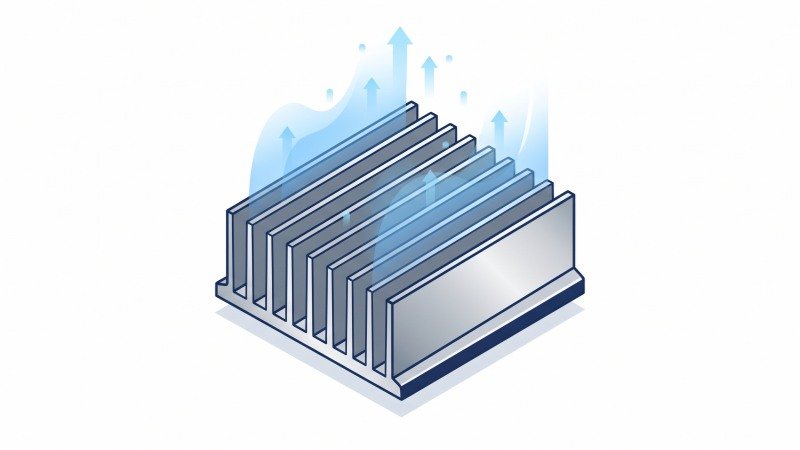
Beyond being light, this metal transfers both heat and electricity exceptionally well. First, let us look at thermal conductivity. In high-speed machining, heat is the enemy of precision. Aluminum’s high thermal conductivity allows it to rapidly dissipate heat generated by cutting tools. Therefore, industrial designers frequently use it for custom heat sinks in CNC control cabinets and high-RPM spindle motor housings to prevent overheating.
Next, consider electrical conductivity. While copper is technically a better conductor per unit of volume, aluminum offers a unique weight-to-conductivity advantage. Specifically, aluminum possesses about 61% of copper’s electrical conductivity by volume. However, because it is much lighter, one pound of aluminum actually conducts twice as much electricity as one pound of copper.
“In machine tool design, utilizing lightweight conductive materials dictates the efficiency and lifespan of internal motion systems and electrical shielding.”
Therefore, utility grids use Aluminum Conductor Steel Reinforced (ACSR) cables. The aluminum efficiently carries the electrical current, while a thin steel core provides the necessary tension support. This specific industrial application perfectly highlights how electrical conductivity and low density work together.
Light and Thermal Reflectivity
Finally, aluminum acts as an excellent reflector. Specifically, a finely polished aluminum surface reflects between 80% and 90% of visible light. Furthermore, it reflects a very similar percentage of radiant heat, also known as infrared radiation.
Because of this high reflectivity, manufacturers use bare aluminum sheets to design protective internal enclosures for CNC laser cutting machines. The metal bounces scattered laser light and radiant heat away very efficiently. This active reflection prevents the machine’s structural frame from absorbing heat and undergoing thermal expansion, which would otherwise destroy machining precision.
Mechanical Properties of Aluminum
Understanding the mechanical properties of aluminum is crucial for determining the exact feeds, speeds, and cutting tools required during the manufacturing process.
Aluminum delivers highly adaptable mechanical performance, defined by an outstanding strength-to-weight ratio and high levels of malleability and ductility. Consequently, these mechanical features allow manufacturers to machine complex geometries without material fracture, while still maintaining enough structural integrity to bear heavy industrial loads.
Strength-to-Weight Ratio
Why do engineers constantly choose aluminum over steel for moving machine parts? The answer lies in its strength-to-weight ratio. This metric, also known as specific strength, compares a material’s physical strength against its total mass.
Pure aluminum is actually quite soft. However, when manufacturers mix it with elements like zinc or magnesium, its strength increases drastically. For instance, aerospace-grade 7075 aluminum undergoes specific heat treatments. As a result, its yield strength reaches over 500 megapascals (MPa).
To understand this, think about the moving gantry (bridge) of a large-format CNC router. If the gantry is made of solid steel, the servo motors waste energy just moving the machine’s own heavy mass, severely limiting acceleration. By using an advanced aluminum alloy, the gantry can move at much higher rapid feed rates while resisting the bending forces generated during heavy cutting. The aluminum gantry weighs significantly less but maintains rigid dimensional accuracy.
Here is a quick look at how aluminum compares mechanically to other common metals:
| Material Type | Typical Yield Strength (MPa) | Density (g/cm³) | Specific Strength / Ratio |
|---|---|---|---|
| A36 Carbon Steel | 250 | 7.8 | Low (~32) |
| 6061-T6 Aluminum | 276 | 2.7 | High (~102) |
| 7075-T6 Aluminum | 503 | 2.8 | Very High (~179) |
Clearly, specific aluminum alloys provide a much higher strength-to-weight ratio than standard structural steel. Therefore, this metal is essential for high-speed automated equipment and advanced robotics.
Malleability and Ductility
Next, we must look at how aluminum behaves during forming and cutting. Malleability and ductility are related but distinct mechanical properties. Malleability means a metal can endure high compression forces without cracking. Ductility means a metal can handle high tensile, or pulling, forces without breaking.
Aluminum excels in both areas. Because of its specific atomic structure, the metal is highly malleable. Therefore, it handles compressive forces exceptionally well, which is why it is frequently used to manufacture custom crush-washers and sealing gaskets for high-pressure hydraulic workholding fixtures in CNC milling centers.
Furthermore, aluminum is highly ductile. This trait allows manufacturers to force the solid metal through complex extrusion dies to create structural T-slot profiles. These extruded aluminum profiles form the rigid framework for custom machine enclosures, robotic workholding cells, and automated chip conveyor systems found in modern CNC job shops.
“While ductility enables complex material forming, precision machining requires a careful balance of hardening to ensure clean chip evacuation.”
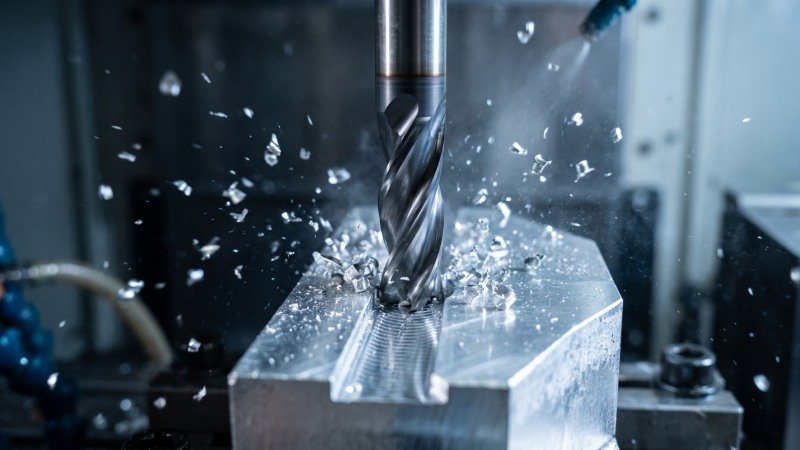
While high ductility is excellent for extrusion and forming processes, it presents a very specific challenge during CNC cutting operations. Highly ductile, unalloyed aluminum tends to be extremely “gummy.” During aggressive machining passes, this soft material fails to shear cleanly, producing long, continuous stringy chips that quickly wrap around end mills, block coolant flow, and create a dangerous built-up edge (BUE) that easily snaps cutting tools. Therefore, precision job shops rely heavily on heat-treated alloys like 6061-T6 or 7075-T6. These specific tempering processes intentionally reduce the material’s raw ductility, allowing the metal to fracture crisply into small, manageable chips that easily evacuate from the cutting zone.
Chemical Properties of Aluminum
The chemical properties of a material dictate its long-term stability when exposed to cutting fluids, lubricants, and harsh factory environments.
Aluminum features exceptional chemical stability because it rapidly reacts with oxygen to form a tough, microscopic surface barrier. Consequently, this natural chemical process provides excellent corrosion resistance, effectively shielding the underlying material from moisture, acidic coolants, and industrial chemicals without needing paint.

Natural Corrosion Resistance
Why do machine builders constantly use aluminum for coolant trays and fluid delivery manifolds instead of standard carbon steel? The answer simply comes down to natural corrosion resistance. Unlike iron, aluminum does not rust.
When standard steel interacts with water-based CNC coolants and oxygen, it forms iron oxide (rust). This rust constantly flakes away, which can easily contaminate the coolant lines and damage precise cutting tools. However, aluminum survives incredibly well in wet machining environments. For example, industrial-grade 5083 aluminum can endure constant exposure to synthetic cutting fluids and harsh machine wash-downs for decades.
Here is a quick comparison of how common industrial metals handle corrosive factory environments:
| Metal Material | Rusts in Moisture? | Needs Protective Coating? | Typical CNC Industry Use Case |
|---|---|---|---|
| Carbon Steel | Yes (Rapidly) | Yes (Epoxy or Zinc layer) | Heavy machine bases and columns |
| 5083 Aluminum | No | No (Naturally protected) | CNC coolant tanks and fluid trays |
| 316 Stainless Steel | No | No (Uses chromium layer) | High-pressure coolant nozzles |
Reactivity and Oxidation Process
How exactly does this natural protection actually work? It all starts with the metal’s extremely high chemical reactivity.
Aluminum has a very strong natural affinity for oxygen. If a carbide end mill cuts a piece of raw aluminum, the fresh surface reacts with the surrounding air in milliseconds. Specifically, this rapid chemical reaction forms a microscopic layer of aluminum oxide.
“The naturally occurring aluminum oxide layer is only a few nanometers thick, yet it is physically hard enough to completely block further chemical degradation.”
Think of it as a self-healing industrial shield. If a sharp metal chip scratches an aluminum fixture plate during a milling operation, the newly exposed metal oxidizes immediately. It literally rebuilds its own protective shield on contact with the air, preventing the harsh cutting fluid from penetrating the base material.
The Industrial Anodizing Process
Furthermore, manufacturers can manipulate this natural oxidation process intentionally. They use a popular finishing technique called anodizing.
During this procedure, technicians submerge machined aluminum components in an electrolytic acid bath. Next, they run a direct electrical current through the liquid. This controlled chemical reaction forces the natural oxide layer to grow much thicker and deeper into the metal.
Consequently, the aluminum surface becomes incredibly hard and wear-resistant. Designers of automated factory robotics and custom CNC fixture plates frequently use anodized aluminum components for this exact reason. The artificially thickened oxide layer provides maximum chemical protection against corrosive factory lubricants, cleaning solvents, and daily physical wear.
Conclusion
Understanding the diverse properties of aluminum explains why it remains a foundational material across modern precision machining. From its incredibly low density and impressive strength-to-weight ratio to its natural defense against corrosive cutting fluids, aluminum allows engineers to build lighter, stronger, and longer-lasting industrial components. Whether it is reflecting radiant heat in a laser cutter or safely maintaining rigid accuracy on a high-speed gantry, this metal consistently delivers high-performance results, cementing its status as an irreplaceable resource in the future of manufacturing.