
What are the most effective overall methods to protect and prevent aluminum from corrosion in industrial applications?
To successfully protect and prevent aluminum from corrosion, industries must deploy a combination of advanced surface treatments, strategic assembly techniques, and strict environmental controls. The core methods include artificially thickening the natural oxide layer through anodizing, applying physical barriers like powder coatings, breaking electrical conductivity between dissimilar metals to stop galvanic reactions, and utilizing pH-neutral cleaning routines alongside VCI packaging for long-term storage.
Apply Industrial Surface Treatments and Protective Coatings
Industrial surface treatments protect aluminum from corrosion by altering its surface chemistry or applying a solid physical barrier. The most reliable methods include anodizing to thicken the natural oxide layer, applying powder coating for a durable plastic-like finish, using chemical conversion coatings to prime the metal, and adding clear protective sealants. These specific processes effectively block moisture, salts, and harsh metalworking fluids from reaching the vulnerable raw metal underneath.
Increase the Natural Oxide Layer Through Anodizing
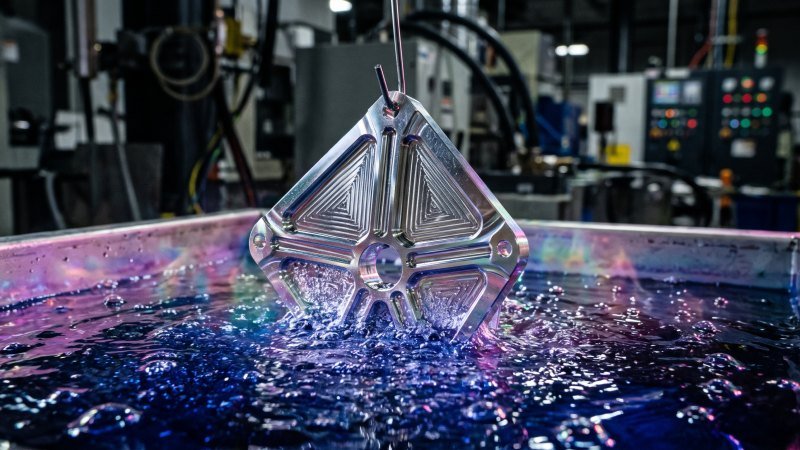
Aluminum naturally resists severe rusting. However, it still degrades over time in harsh manufacturing or outdoor environments. Therefore, manufacturers heavily rely on anodizing. Anodizing is an electrochemical process that artificially thickens the natural, protective oxide layer on the metal.
During this process, workers submerge the aluminum in an acid bath. The aluminum acts as the positive electrode, or anode. Next, an electric current passes through the liquid bath. Consequently, a very dense aluminum oxide barrier grows out of the base metal. Think of this process like case-hardening a steel gear in a machine shop. Instead of simply painting a new material on top, you force the base metal itself to grow a thicker, harder, and highly wear-resistant outer crust.
Different types of anodizing offer varying levels of protection.
| Anodizing Type | Typical Thickness | Primary Benefit | Best Industry Use Case |
|---|---|---|---|
| Type II (Sulfuric) | 0.0002 to 0.001 inches | Good overall corrosion resistance and allows for color dyeing. | Architectural panels, custom CNC enclosures, and consumer goods. |
| Type III (Hardcoat) | 0.001 to 0.003 inches | Extreme wear resistance and superior chemical defense. | Industrial fluid valves, tooling fixtures, and aerospace components. |
Create a Durable Physical Barrier with Powder Coating
Sometimes, you need more protection than an oxide layer can provide. In these cases, powder coating serves as an excellent physical barrier. First, a technician uses a spray gun to apply a dry polymer powder to the aluminum part. The powder carries a positive electrostatic charge. Meanwhile, the aluminum part itself is grounded. Therefore, the charged powder sticks tightly to the bare metal like a magnet.
Next, the coated part enters a high-temperature curing oven. The intense heat melts the dry powder into a smooth, continuous plastic-like film. Ultimately, this solid film completely seals the aluminum from moisture, corrosive salts, and damaging ultraviolet (UV) light.
High-quality industrial powder coatings on aluminum can successfully withstand over 1,000 hours of continuous salt spray exposure under the ASTM B117 testing standard without failing.
Powder coating offers several distinct advantages for long-term corrosion prevention:
- Zero Porosity: The melted film leaves no microscopic holes for water or cutting fluids to penetrate.
- Impact Resistance: The flexible coating absorbs minor impacts without chipping.
- Chemical Defense: It resists damage from industrial solvents, acidic rain, and harsh coolants.
Use Chemical Conversion Coatings for Base Protection
What if you need corrosion protection but must also maintain the metal’s electrical conductivity? Both powder coating and anodizing act as electrical insulators. Consequently, they block electric currents. Chemical conversion coatings directly solve this specific engineering problem.
Commonly known in the industry as Chem Film or Alodine, this treatment involves dipping the aluminum into a specialized chemical bath. The active chemicals react immediately with the surface. They form a microscopic, protective gel layer. Later, this gel dries into an incredibly thin film.
Parts treated under the MIL-DTL-5541 military standard safely retain their electrical conductivity. Simultaneously, they easily pass demanding military-grade corrosion tests. Furthermore, these conversion coatings serve as a perfect paint primer. They create a slightly textured micro-surface. This texture helps wet paints and aerospace primers grip firmly to the otherwise slick aluminum.
Apply Clear Protective Paints and Sealants for Targeted Defense
Heavy industrial tank processes are not always possible. For instance, you certainly cannot dunk a massive, already-installed aluminum structural frame into an anodizing bath. In these field situations, clear protective paints and liquid sealants offer a highly practical alternative.
These liquid products typically include advanced acrylics, tough polyurethanes, and modern silane-based sealants. You can simply spray or brush them directly onto properly cleaned aluminum. Once dried, they form a clear shield that actively blocks out water and oxygen.
Ideal Scenarios for Liquid Sealants
While less durable than baked powder coats, liquid sealants remain vital for specific applications.
- Field Repairs: Workers can easily reapply sealants to scratched or damaged aluminum structures on-site.
- Aesthetic Preservation: Clear coatings prevent oxidation while keeping the shiny, bare-metal look visible.
- Size Limitations: Liquid paints easily protect massive CNC gantry beams that simply cannot fit inside standard manufacturing ovens or chemical tanks.
Stop Galvanic Corrosion in Mixed-Metal Assemblies
To stop galvanic corrosion in mixed-metal assemblies, engineers physically isolate the different metals to break the electrical circuit. You can prevent this destructive reaction by installing non-conductive insulators, implementing sacrificial anodes to draw the corrosive attack away, and sealing structural joints with dielectric grease to block conductive moisture.
Install Non-Conductive Insulators Between Dissimilar Metals
Galvanic corrosion requires two different metals and an electrically conductive liquid, like saltwater or water-based CNC coolant. If you connect aluminum directly to a more noble metal, like stainless steel, the aluminum quickly deteriorates. Therefore, the most direct solution is physical separation.
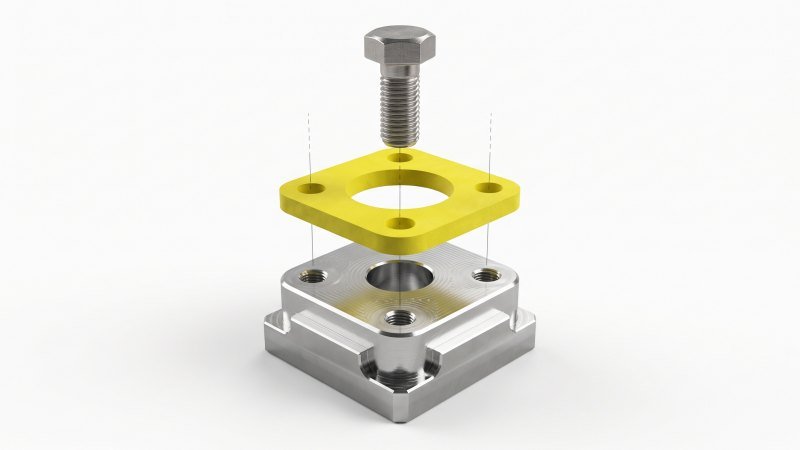
You must break the electrical path between the two metals. To achieve this, assembly workers insert non-conductive materials between the metal surfaces.
Industry professionals rely on several types of solid insulators.
| Insulator Type | Common Material | Primary Assembly Use |
|---|---|---|
| Washers | Nylon or PTFE | Placed under stainless steel bolt heads and nuts. |
| Sleeves | Plastic tubing | Inserted inside drilled holes to isolate bolt threads. |
| Gaskets | Neoprene rubber | Sandwiched between large, flat metal plates or flanges. |
For example, when mounting a heavy stainless steel industrial pump onto an aluminum structural base, engineers never let the metals touch directly. They place a protective neoprene gasket under the pump housing. Next, they slide plastic insulating sleeves over the mounting bolts. Consequently, the steel and aluminum remain completely electrically isolated, stopping corrosion before it starts.
Implement Sacrificial Anodes to Divert Corrosive Activity
Sometimes, you cannot easily separate metals with plastic pads. What do you do then? You use the rules of chemistry to your advantage. You can intentionally introduce a third, highly reactive metal into the system. This method is called cathodic protection.
Why let your expensive aluminum structure corrode when a cheap piece of replaceable metal can take the damage instead? A sacrificial anode is a block of metal that corrodes much faster than aluminum. When you bolt this active metal directly to the aluminum assembly, it becomes the anode in the chemical battery.
By willingly sacrificing a cheap anode, you force the valuable aluminum components to act as the cathode, leaving them completely protected from degradation.
Marine and heavy machining equipment industries use this strategy extensively. However, you must select the correct anode material based on your specific environment.
Selecting the Right Anode Material
- Zinc Anodes: Zinc is the industry standard for saltwater or highly conductive fluid applications. It provides a steady, reliable voltage to protect submerged assemblies.
- Magnesium Anodes: Magnesium is much more active than zinc. Therefore, engineers use it strictly for freshwater or low-conductivity applications. If you use magnesium in highly conductive environments, it burns away too rapidly.
Seal Metal Joints and Fasteners with Dielectric Grease
Even with solid insulators, microscopic gaps always remain in mechanical joints. Water and environmental salts inevitably creep into bolt threads and tight overlapping seams. Because these liquids act as electrolytes, they instantly trigger galvanic corrosion.
You can block this process by applying a barrier like dielectric grease or specialized thread sealants. Before threading a stainless steel fastener into a tapped aluminum hole, technicians coat the threads with a carefully controlled, microscopic film of this grease.
Professionals must exercise extreme caution here. When dealing with blind holes (holes that do not go all the way through the metal), applying too much thick grease is fatal. The incompressible grease cannot escape, creating a massive “hydraulic lock” that will instantly crack or burst thin-walled aluminum parts when the bolt is tightened. Instead, technicians use only a highly controlled thin oil film or liquid anaerobic threadlockers for blind holes. When applied correctly and sparingly, these barriers safely displace air and moisture, leaving absolutely no room for an electrolyte to trigger the galvanic reaction.
Establish Routine Maintenance and Storage Protocols
To successfully prevent aluminum corrosion during daily use and storage, facilities must implement strict maintenance protocols. First, maintenance teams must regularly wash aluminum surfaces with pH-neutral cleaners to remove corrosive salts, tramp oils, and industrial debris. Second, for long-term storage, warehouses should utilize Volatile Corrosion Inhibitor (VCI) packaging and actively control climate humidity. These standardized routines effectively neutralize environmental threats before they can break down the metal.
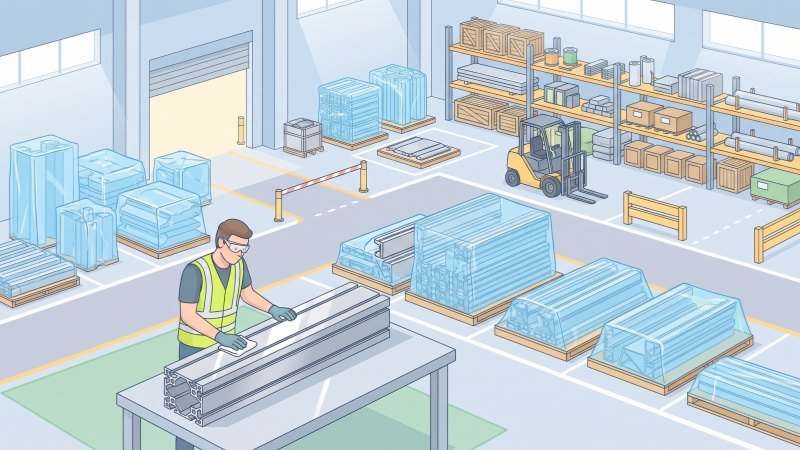
Remove Surface Salts and Debris via Regular Cleaning
Even the highest-grade aluminum requires regular cleaning in tough environments. Airborne dirt, industrial soot, and corrosive salts constantly settle on exposed metal surfaces. If left alone, these particles trap moisture against the aluminum. Consequently, this trapped moisture creates localized corrosion cells. Eventually, this leads to a specific, highly destructive damage called pitting corrosion.
Therefore, regular washing is absolutely critical. However, you cannot use just any industrial soap. Aluminum reacts poorly to extreme chemicals. Heavy alkaline degreasers will actually strip away the aluminum’s natural protective layer. Instead, maintenance crews must strictly use pH-neutral cleaners.
Think of this routine cleaning process like clearing sharp metal chips from the guide rails of a CNC lathe. If you leave steel chips on the machine bed, the sliding carriage will eventually grind them into the precision surfaces, causing permanent physical damage. Similarly, leaving corrosive deposits on aluminum allows them to chemically slowly eat into the metal structure over time.
Industry data shows that routine cleaning and rinsing can extend the lifespan of exposed aluminum structures in industrial environments by up to 50% compared to unwashed materials.
Best Practices for Industrial Aluminum Cleaning:
- Use pH-Neutral Solutions: Always select gentle cleaners with a pH level between 6 and 8.
- Avoid Abrasive Pads: Never use steel wool or hard carbon-steel wire brushes. These tools deeply scratch the metal and embed rust-prone steel particles directly into the aluminum.
- Rinse Thoroughly: Always finish with a clean rinse to remove all suspended dirt and chemical residue.
Utilize VCI Packaging and Climate Control for Long-Term Storage
Manufacturers frequently store raw aluminum extrusions or finished machined parts for months before assembly. During this time, the metal is highly vulnerable to “storage stain” or water stain. This specific type of corrosion looks like white, chalky spots. It happens rapidly when condensation forms between closely stacked metal sheets or precision-machined components.
To combat this, logistics managers deploy two primary defenses: Volatile Corrosion Inhibitor (VCI) packaging and strict climate control.
The Mechanics of VCI Packaging
VCI technology offers active, ongoing protection. VCI materials commonly come in the form of poly bags, wrapping paper, or foam tank emitters. When you place aluminum parts inside a VCI bag, the packaging releases special rust-preventative chemical vapors. Next, these vapors travel through the air inside the closed bag. Finally, they condense directly onto the aluminum surface, forming an invisible, molecular shield.
This microscopic shield aggressively repels water and prevents oxygen from reacting with the metal. When workers later remove the part from the bag for final CNC machining or assembly, the VCI layer simply evaporates harmlessly into the room without leaving a sticky residue.
Warehouse Climate Control Standards
While VCI packaging handles the micro-environment around the part, warehouse climate control manages the macro-environment. Fluctuating warehouse temperatures cause airborne humidity to condense into liquid water on cold metal stock. Therefore, warehouses must maintain stable temperatures to keep the metal safely above the ambient dew point.
| Storage Strategy | Humidity Control Method | Primary Protection Mechanism | Ideal Industrial Application |
|---|---|---|---|
| Standard Polyethylene | None (Can trap existing moisture) | Basic dirt and dust barrier | Short-term domestic transit (under 2 weeks) |
| Climate-Controlled Facility | Maintained below 40% Relative Humidity | Prevents surface condensation | Bulk raw material and extrusion storage |
| VCI Film & Bags | Active chemical vapor shield | Neutralizes trapped moisture | Overseas export shipping and long-term machined part storage |
By purposefully combining low warehouse humidity with localized VCI packaging, you completely eliminate the water necessary for corrosion. As a result, your aluminum inventory remains perfectly pristine until it is ready for final production.
Conclusion
Protecting aluminum from corrosion is a comprehensive process that demands careful attention across manufacturing, assembly, and daily operations. By applying robust surface treatments, meticulously isolating dissimilar metals to stop galvanic reactions, and adhering to strict maintenance and storage protocols, facilities can drastically extend the lifespan of their aluminum assets. Ultimately, the most effective defense against corrosion is proactive engineering and consistent environmental control rather than relying on reactive repairs.