
When engineers and manufacturers need an alternative material for a project, what metal is most similar to aluminum?
Magnesium and titanium are the closest and most common metals similar to aluminum in industrial applications. Magnesium serves as the primary alternative for extreme lightweight requirements, weighing roughly 33% less than aluminum, while titanium acts as the premium substitute when exceptional structural integrity, high tensile strength, and superior heat resistance are strictly required.
Magnesium as the Primary Lightweight Alternative
Why is magnesium often the top choice when engineers look for a metal similar to aluminum?
Magnesium is the closest lightweight alternative to aluminum because it shares similar manufacturing characteristics, a high strength-to-weight ratio, and excellent castability. It offers a comparable silver-white finish but provides a major advantage in mass, weighing roughly 33% less than standard aluminum alloys.

Density Differences and Weight Savings
How much mass can you actually remove without altering a part’s physical footprint? This is the main question engineers ask when replacing aluminum.
Magnesium has a base density of just 1.74 g/cm³. Meanwhile, standard aluminum has a density of 2.70 g/cm³. Therefore, magnesium is significantly lighter. If you manufacture a structural part of identical size, the magnesium version will weigh about one-third less.
This reduction is highly valuable for modern manufacturing. For instance, in drone frame design or aerospace fixturing, every single gram matters. Switching from aluminum to magnesium removes dead weight without shrinking the part’s physical volume.
Think of upgrading from a standard solid CNC milling spindle to a hollow-shank (HSK) spindle configuration. The new spindle keeps the exact same outer dimensions and interface. However, the internal mass drops sharply, reducing the load on the motor and allowing for faster acceleration. Similarly, magnesium reduces the overall component weight while strictly preserving the original design envelope.
To illustrate this difference, review the comparative density data below:
| Metal Alloy Type | Density (g/cm³) | Weight Compared to Aluminum |
|---|---|---|
| Aluminum (A380) | 2.71 | Baseline (0%) |
| Magnesium (AZ91D) | 1.81 | – 33.2% |
Machinability and Production Efficiency
Beyond just weight, how does magnesium perform on the factory floor? Production efficiency relies heavily on how easily a machine can cut a metal. Magnesium excels in this specific area. In fact, it actually machines much faster than standard aluminum.
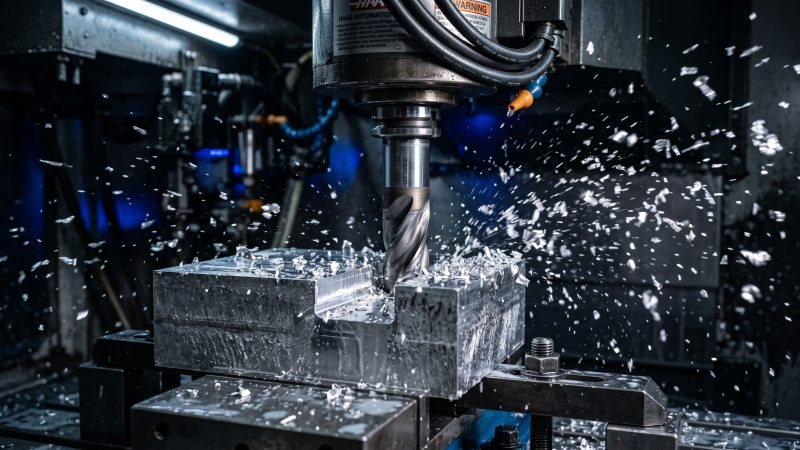
Because magnesium is highly brittle at the microscopic level, metal chips break cleanly. As a result, long chips do not wrap around or clog the cutting tools. Therefore, manufacturers can safely increase feed rates and spindle speeds. Cutting speeds for magnesium can often run 50% higher than those used for standard aluminum alloys.
We can compare this to another common workshop scenario. Machining magnesium is similar to cutting free-machining brass. The cutting tool glides through the material with very little resistance. Conversely, softer aluminum alloys tend to smear, drag, and stick to the cutting edge, leading to built-up edge (BUE) on the end mill.
Critical Safety Protocols for Combustible Chips
While magnesium machines beautifully, this speed introduces a severe, potentially catastrophic shop hazard: metal fires. Magnesium chips and fine dust ignite instantly under high friction. If a shop blindly switches from aluminum to magnesium without changing their setup, the results can be disastrous.
Most importantly, standard water-based coolants (emulsions) used for aluminum react violently with magnesium chips to produce highly explosive hydrogen gas. To process magnesium safely, operators must strictly use pure mineral oil-based coolants or employ carefully controlled dry machining. Furthermore, cutting tools require large clearance angles and extreme sharpness to prevent rubbing and heat buildup. Finally, operators must constantly evacuate chips from the machining enclosure and keep specialized Class D metal fire extinguishers on hand, as normal water or CO2 extinguishers will only accelerate a magnesium fire.
Tool Life and Power Consumption
Because magnesium requires lower cutting forces, it significantly extends tool life. CNC machines consume less electrical power during the active cutting cycle. Consequently, factories save both machining time and electrical energy.
“According to baseline machining data, magnesium alloys require only 55% of the electrical power needed to machine cast aluminum, leading to major energy cost reductions and significantly less wear on machine tool spindles.”
Furthermore, magnesium offers excellent die-casting properties. Liquid magnesium flows very smoothly into highly complex molds. Therefore, engineers can cast thinner component walls than they could with aluminum. Ultimately, this capability directly boosts overall production efficiency and lowers cycle times.
Titanium as the High-Strength Substitute
When extreme mechanical stress demands more than aluminum can deliver, engineers must identify a reliable upgrade path.
Titanium is the premier high-strength substitute for aluminum because it offers massive tensile strength alongside a relatively low density. Consequently, engineers choose titanium when a project requires aluminum’s lightness combined with the extreme structural integrity of steel.
Tensile Strength and Structural Integrity
Are your manufactured parts failing under heavy physical loads? If so, engineers immediately look to titanium. Titanium easily outperforms aluminum in pure mechanical strength. Specifically, the manufacturing industry heavily relies on titanium alloy Ti-6Al-4V. This specific grade boasts a tensile strength of roughly 950 megapascals (MPa).
Meanwhile, common aerospace aluminum (like 7075-T6) reaches only about 570 MPa. Furthermore, standard industrial aluminum (6061-T6) maxes out around just 310 MPa. Therefore, titanium can support much heavier physical loads without bending or deforming.
Think of upgrading from a standard high-speed steel (HSS) drill bit to a solid tungsten carbide bit. Both tools fit into the exact same machine chuck and look functionally similar. However, the carbide bit absorbs significantly higher cutting forces and heat before snapping or dulling. Similarly, titanium replaces aluminum when structural parts face extreme mechanical stress that would cause aluminum to yield.
By switching to titanium, designers can often use less material. Ultimately, this creates a stronger component without adding excessive bulk to the assembly.
Extreme Temperature and Corrosion Resistance
How do these two metals behave when exposed to severe heat? Aluminum rapidly loses its structural strength at elevated temperatures. Specifically, most aluminum alloys weaken significantly above 150 degrees Celsius. Conversely, titanium thrives in highly thermal environments. In fact, titanium maintains strict dimensional stability and strength up to 500 degrees Celsius.
Additionally, titanium creates an incredibly tough, naturally occurring oxide layer. Consequently, it resists harsh chemicals, saltwater, and industrial acids perfectly. Aluminum also forms a protective oxide layer. However, aluminum’s layer degrades quickly under extreme chemical exposure or galvanic corrosion.
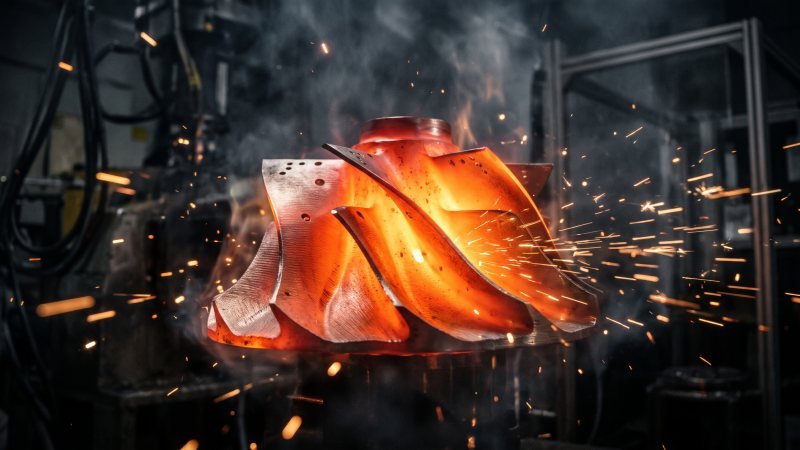
Consider a manufacturing plant operating an aggressive industrial chemical pump. If you install standard aluminum impellers, highly corrosive fluids will quickly pit the metal. Eventually, the aluminum part will fail completely. Therefore, mechanics must upgrade to titanium impellers. The titanium surface simply ignores the corrosive fluid, preventing catastrophic equipment failure and expensive line shutdowns.
“Industrial testing shows that titanium consistently outlasts standard aluminum in high-heat aerospace and fluid-handling applications, sharply reducing long-term replacement cycles.”
Below is a clear comparison of how these metals handle extreme conditions:
| Performance Metric | Standard Aluminum (6061-T6) | Aerospace Titanium (Ti-6Al-4V) |
|---|---|---|
| Maximum Operating Heat | ~150°C | ~500°C |
| Baseline Tensile Strength | 310 MPa | 950 MPa |
| Corrosion Protection | Moderate (Degrades in strong acids) | Exceptional (Highly immune) |
Cost and Performance Trade-offs Between the Alternatives
Balancing the financial impact and practical benefits is a critical step when transitioning away from standard aluminum.
Manufacturers must carefully evaluate raw material costs, tooling expenses, and long-term durability before upgrading. While magnesium and titanium provide superior weight savings and structural strength, their initial procurement and processing costs are significantly higher. Therefore, engineers must justify these premium materials based entirely on the specific performance demands of the final product.

Raw Material Pricing Comparison
Are the enhanced physical properties worth the extra money? For many projects, the upfront material cost dictates the final decision. Aluminum remains the global standard because it is highly abundant and cheap to process. Consequently, it offers a fantastic baseline for budget-conscious manufacturing.
Meanwhile, magnesium generally costs about 20% to 40% more than standard aluminum. Producing raw magnesium requires more complex extraction methods. However, because magnesium is lighter, you get more physical volume per kilogram. Therefore, the actual cost difference per part is sometimes smaller than the raw weight price suggests.
Conversely, titanium introduces a massive financial jump. Processing raw titanium ore into usable metal requires extreme heat and specialized vacuum environments. As a result, titanium can easily cost ten times more than aluminum. Furthermore, machining titanium requires specialized, wear-resistant carbide inserts and rigid machine setups, which further drives up the manufacturing cost.
Think of this financial decision like upgrading factory equipment. Buying a standard 3-axis CNC mill is very affordable and handles 80% of daily workshop tasks. Upgrading to a complex 5-axis machining center costs significantly more upfront. However, that premium cost is strictly necessary if your shop must produce highly intricate, multi-sided aerospace parts. Similarly, you only pay the premium for titanium when the project absolutely demands it.
Review the market cost comparison in the table below:
| Material Grade | Estimated Market Price (Per kg) | Cost Compared to Aluminum |
|---|---|---|
| Standard Aluminum (6061) | ~$2.50 – $3.00 | Baseline |
| Magnesium (AZ91D) | ~$3.50 – $4.50 | Moderate Premium |
| Aerospace Titanium (Ti-6Al-4V) | ~$30.00 – $40.00 | Extreme Premium |
(Note: Raw material prices fluctuate daily based on global commodity markets. These estimates reflect general industrial ratios.)
Industry-Specific Application Scenarios
Where exactly do these metals belong on the actual assembly line? Different industries tolerate different cost levels. Ultimately, the chosen metal must match the financial realities of the specific industry.
High-Volume Consumer Goods
For mass-produced items, budget is the primary concern. Therefore, manufacturers heavily rely on standard aluminum. You will see aluminum constantly used in everyday bicycle frames, standard electronic enclosures, and basic hardware. It provides a “good enough” performance for a highly competitive price point.
Automotive and Portable Electronics
Automakers and laptop brands face a different challenge. They desperately need to cut weight to improve fuel efficiency and battery life. Consequently, they gladly pay the moderate premium for magnesium.
- Steering Wheel Armatures: Magnesium reduces steering column weight, improving vehicle handling and reducing vibration.
- Laptop Chassis: Magnesium alloys provide rigid screen protection and efficient heat dissipation without making the device too heavy for a backpack.
Aerospace and Medical Devices
In high-stakes industries, failure is simply not an option. Therefore, budget restrictions take a back seat to absolute reliability. Aerospace engineers gladly absorb titanium’s massive costs.
- Aircraft Landing Gear: Only titanium can survive the immense physical shock of a commercial jet landing repeatedly while maintaining a relatively low weight profile.
- Medical Implants: Titanium is uniquely biocompatible. It bonds safely with human bone for joint replacements, making the high cost completely irrelevant compared to patient safety.
“In precision engineering, material selection is never just about finding the strongest metal. Instead, it is about finding the most cost-effective metal that meets the strict minimum safety and functional requirements of the design.”
Conclusion
Finding a metal similar to aluminum ultimately depends on the specific performance gap you are trying to fill on the production floor. If absolute weight reduction is the primary goal, magnesium serves as the perfect lightweight alternative. Conversely, if your components are failing under intense physical stress or extreme heat, titanium provides the necessary structural upgrade. By carefully weighing the performance benefits against raw material costs, manufacturers can confidently select the exact alloy their engineering project requires.